In today’s hyper-competitive business landscape, a CRM big data analytics platform isn’t just a luxury—it’s a necessity. By merging customer relationship management with advanced data analytics, companies unlock unprecedented insights into behavior, preferences, and future trends.
What Is a CRM Big Data Analytics Platform?

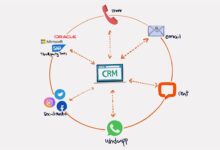
A CRM big data analytics platform integrates customer relationship management systems with big data technologies to collect, process, and analyze vast volumes of customer-related data in real time. This fusion allows businesses to move beyond traditional CRM functionalities—like contact management and sales tracking—and dive deep into predictive modeling, sentiment analysis, and personalized engagement strategies.
Core Components of the Platform
The architecture of a CRM big data analytics platform typically consists of several interconnected layers: data ingestion, storage, processing, analytics, and visualization. Each component plays a vital role in transforming raw data into actionable business intelligence.
- Data Ingestion: Tools like Apache Kafka or AWS Kinesis stream data from multiple sources—CRM systems, social media, IoT devices, and transaction logs—into the platform.
- Data Storage: Distributed systems such as Hadoop HDFS or cloud-based data lakes (e.g., Amazon S3, Google Cloud Storage) securely store structured and unstructured data at scale.
- Processing Engine: Frameworks like Apache Spark or Flink process data in batch or real-time, enabling rapid analysis of customer interactions.
How It Differs from Traditional CRM
Traditional CRM systems focus on managing customer interactions through sales pipelines, service tickets, and marketing campaigns. While effective for operational tasks, they lack the analytical depth required to anticipate customer needs.
In contrast, a CRM big data analytics platform leverages machine learning and AI to predict churn, recommend products, and identify high-value customer segments. For example, while a legacy CRM might tell you that a customer made three purchases last year, the advanced platform can predict their likelihood of upgrading in the next quarter based on behavioral patterns, social sentiment, and external market factors.
“The shift from reactive to proactive customer engagement is powered by the integration of CRM and big data analytics.” — Gartner Research, 2023
Why Businesses Need a CRM Big Data Analytics Platform
Organizations across industries—from retail and finance to healthcare and telecommunications—are adopting CRM big data analytics platforms to stay ahead. The ability to harness customer data at scale provides a strategic advantage in customer acquisition, retention, and lifetime value optimization.
Improved Customer Segmentation
With access to behavioral, demographic, and transactional data, businesses can create hyper-personalized customer segments. For instance, an e-commerce company can segment users not just by purchase history, but by browsing behavior, device usage, and social media engagement.
Advanced clustering algorithms, such as k-means or hierarchical clustering, enable dynamic segmentation that evolves with customer behavior. This allows for targeted marketing campaigns with significantly higher conversion rates.
Real-Time Decision Making
One of the most transformative benefits of a CRM big data analytics platform is real-time analytics. Instead of waiting for weekly reports, sales and marketing teams can respond instantly to customer actions.
- A customer abandoning a shopping cart triggers an immediate personalized email or push notification.
- A sudden spike in support queries about a product feature alerts the service team to potential issues.
- Sentiment analysis of social media mentions allows PR teams to respond to brand crises within minutes.
Platforms like Salesforce Einstein and Microsoft Dynamics 365 with Azure Synapse integration offer real-time dashboards that empower decision-makers with up-to-the-minute insights.
Key Features of a Modern CRM Big Data Analytics Platform
To deliver maximum value, a CRM big data analytics platform must include a suite of advanced features that go beyond basic reporting. These capabilities enable organizations to extract meaningful insights and drive customer-centric strategies.
Predictive Analytics and Machine Learning
Predictive analytics uses historical data to forecast future outcomes. In a CRM context, this includes predicting customer churn, lifetime value, and next-best-action recommendations.
Machine learning models, such as logistic regression, random forests, or neural networks, are trained on customer data to identify patterns. For example, a telecom provider might use a churn prediction model to identify subscribers at risk of leaving and proactively offer retention incentives.
According to a study by IBM, companies using predictive analytics in CRM see up to a 20% increase in customer retention rates.
Customer Journey Mapping
Understanding the complete customer journey—from awareness to post-purchase support—is critical for optimizing touchpoints. A CRM big data analytics platform aggregates data across channels (web, mobile, email, call centers) to create a unified view of the customer journey.
Tools like Google Analytics 360 integrated with CRM systems allow businesses to visualize pathing behavior, identify drop-off points, and optimize conversion funnels. For example, a travel company can analyze how users move from social media ads to booking confirmation and adjust ad spend accordingly.
AI-Powered Chatbots and Virtual Assistants
Integrating AI-driven chatbots into a CRM big data analytics platform enhances customer service while collecting valuable interaction data. These bots learn from every conversation, improving response accuracy over time.
For instance, a banking CRM might deploy a virtual assistant that answers FAQs, processes transactions, and escalates complex issues to human agents—all while logging sentiment and intent for future analysis. This data feeds back into the analytics engine, refining customer profiles and service strategies.
Top CRM Big Data Analytics Platforms in 2024
The market for CRM big data analytics platforms is rapidly evolving, with vendors offering increasingly sophisticated solutions. Below are some of the leading platforms that combine robust CRM functionality with powerful big data analytics.
Salesforce Einstein Analytics
Salesforce Einstein is one of the most widely adopted CRM big data analytics platforms. It integrates seamlessly with Salesforce CRM and uses AI to deliver predictive insights, automated reports, and natural language queries.
Key features include:
- Predictive lead scoring based on historical conversion data.
- Sentiment analysis of customer emails and service cases.
- Automated dashboard generation using AI-driven insights.
Salesforce leverages its own Trailhead learning platform and extensive AppExchange ecosystem to enable customization and scalability. More information can be found at Salesforce Einstein Overview.
Microsoft Dynamics 365 + Azure Synapse
Microsoft’s offering combines Dynamics 365 for Customer Engagement with Azure Synapse Analytics, creating a powerful CRM big data analytics platform. This integration allows enterprises to analyze petabytes of customer data with low latency.
Advantages include:
- Unified data model across ERP, CRM, and productivity tools (e.g., Outlook, Teams).
- Real-time analytics using Power BI dashboards.
- Advanced machine learning via Azure Machine Learning Studio.
Organizations already using Microsoft 365 find this integration particularly seamless, reducing data silos and improving cross-departmental collaboration.
Oracle CX Unity with Oracle ADWC
Oracle’s Customer Experience (CX) Unity platform connects data from various touchpoints—marketing, sales, service, and commerce—into a single customer profile. When paired with Oracle Autonomous Data Warehouse (ADWC), it becomes a formidable CRM big data analytics platform.
Notable capabilities:
- AI-driven personalization engine for real-time content recommendations.
- Identity resolution across devices and channels.
- Automated anomaly detection in customer behavior.
Oracle’s strength lies in its enterprise-grade security and scalability, making it ideal for large organizations in regulated industries like finance and healthcare.
How to Implement a CRM Big Data Analytics Platform
Deploying a CRM big data analytics platform requires careful planning, cross-functional collaboration, and a clear roadmap. A poorly executed implementation can lead to data silos, poor user adoption, and wasted investment.
Assess Your Data Maturity
Before selecting a platform, evaluate your organization’s data maturity. Key questions include:
- Do you have a centralized data repository?
- Is your data clean, consistent, and properly labeled?
- Do you have the technical skills to manage big data infrastructure?
Companies at lower data maturity levels may need to start with data governance and integration projects before adopting a full CRM big data analytics platform.
Choose the Right Platform
Selecting the right CRM big data analytics platform depends on several factors:
- Business Size: SMBs may prefer cloud-based, low-code platforms like HubSpot or Zoho, while enterprises often require scalable solutions like SAP C/4HANA or Adobe Experience Cloud.
- Industry Needs: Retailers may prioritize real-time personalization, while B2B companies focus on lead scoring and account-based marketing.
- Integration Requirements: Ensure the platform can connect with existing ERP, marketing automation, and customer service tools.
A thorough vendor evaluation should include demos, proof-of-concept trials, and reference checks.
Ensure Data Privacy and Compliance
With the rise of regulations like GDPR, CCPA, and HIPAA, data privacy is a critical consideration. A CRM big data analytics platform must include robust security features such as encryption, role-based access control, and audit logging.
Additionally, businesses must obtain proper consent for data collection and ensure transparency in how customer data is used. Non-compliance can result in hefty fines and reputational damage.
“Data is the new oil, but only if it’s refined ethically and securely.” — The Economist, 2022
Challenges in Adopting CRM Big Data Analytics Platforms
Despite their benefits, CRM big data analytics platforms come with significant challenges that organizations must navigate to achieve success.
Data Silos and Integration Complexity
One of the biggest hurdles is breaking down data silos. Customer data often resides in disconnected systems—CRM, ERP, email marketing, social media—making it difficult to create a unified view.
Integration requires not only technical solutions (like APIs and ETL pipelines) but also organizational alignment. Departments must be willing to share data and adopt common data standards.
Skill Gaps and Talent Shortage
Operating a CRM big data analytics platform demands a mix of skills: data engineering, data science, CRM administration, and business analytics. Many organizations lack in-house expertise, leading to reliance on consultants or managed services.
Investing in training programs or partnering with vendors that offer managed analytics services can help bridge this gap. Platforms with low-code/no-code interfaces, such as Tableau CRM (formerly Einstein Analytics), are also gaining popularity for empowering non-technical users.
Cost and ROI Uncertainty
Implementing a CRM big data analytics platform can be expensive, with costs spanning software licenses, cloud infrastructure, data storage, and personnel. SMBs, in particular, may struggle with budget constraints.
To justify the investment, businesses should define clear KPIs—such as increased conversion rates, reduced churn, or higher average order value—and track ROI over time. Starting with a pilot project focused on a specific use case (e.g., churn prediction) can demonstrate value before scaling.
Future Trends in CRM Big Data Analytics Platforms
The evolution of CRM big data analytics platforms is being driven by advancements in AI, cloud computing, and customer expectations. Staying ahead of these trends is essential for long-term competitiveness.
Hyper-Personalization at Scale
Future platforms will enable hyper-personalization—delivering unique experiences to each customer in real time. This goes beyond using a customer’s name in an email; it involves dynamically adjusting website content, product recommendations, and pricing based on individual behavior and context.
For example, an online fashion retailer might show different homepage layouts to users based on their browsing history, weather in their location, and social trends. This level of personalization is only possible with a CRM big data analytics platform that processes vast datasets in milliseconds.
Edge Analytics and IoT Integration
As more devices become connected, CRM systems will incorporate data from IoT sensors and edge devices. A smart home appliance manufacturer, for instance, could use data from connected devices to predict maintenance needs and proactively contact customers.
Edge analytics—processing data closer to the source—reduces latency and enables faster decision-making. When integrated with a CRM big data analytics platform, this creates new opportunities for predictive service and customer engagement.
Explainable AI and Ethical Analytics
As AI becomes more embedded in CRM decisions, there is growing demand for transparency. Customers and regulators want to know how decisions—like credit scoring or ad targeting—are made.
Explainable AI (XAI) techniques will become standard in CRM big data analytics platforms, allowing businesses to audit model decisions and ensure fairness. This not only builds trust but also helps avoid algorithmic bias that could damage brand reputation.
Measuring Success: KPIs for Your CRM Big Data Analytics Platform
Deploying a CRM big data analytics platform is only the first step. To ensure long-term success, organizations must track key performance indicators (KPIs) that reflect both operational efficiency and business impact.
Customer Lifetime Value (CLV)
CLV measures the total revenue a business can expect from a single customer over their lifetime. A well-implemented CRM big data analytics platform should increase CLV by enabling better retention, upselling, and cross-selling.
By analyzing purchasing patterns and engagement history, the platform can identify high-CLV customers and tailor strategies to maximize their value.
Churn Rate Reduction
Customer churn is a critical metric, especially in subscription-based models. Predictive analytics within the CRM big data analytics platform can identify early warning signs of churn—such as decreased login frequency or negative sentiment in support tickets.
Proactive interventions, like personalized offers or dedicated account management, can reduce churn rates significantly. Companies using advanced analytics report churn reductions of 15–30%, according to McKinsey & Company.
Marketing Campaign ROI
Traditional marketing metrics like click-through rates are giving way to more sophisticated measures of campaign effectiveness. A CRM big data analytics platform enables multi-touch attribution, showing how each interaction contributes to a conversion.
This allows marketers to optimize budget allocation, focusing on channels and messages that drive the highest ROI. For example, a B2B company might discover that LinkedIn ads combined with targeted email sequences generate 3x more qualified leads than standalone campaigns.
What is a CRM big data analytics platform?
A CRM big data analytics platform combines customer relationship management software with big data technologies to collect, analyze, and act on vast amounts of customer data. It enables businesses to gain deeper insights, predict behavior, and personalize interactions at scale.
How does big data improve CRM?
Big data enhances CRM by providing a 360-degree view of the customer, enabling predictive analytics, real-time decision-making, and personalized marketing. It transforms CRM from a transactional system into a strategic intelligence hub.
Which industries benefit most from CRM big data analytics?
Industries with large customer bases and complex interactions—such as retail, banking, telecommunications, healthcare, and e-commerce—benefit the most. These sectors leverage the platform for churn reduction, fraud detection, personalized offers, and service optimization.
Is a CRM big data analytics platform suitable for small businesses?
Yes, especially with the rise of cloud-based, scalable solutions. While large enterprises were early adopters, platforms like HubSpot, Zoho, and Salesforce Essentials now offer affordable, low-code options tailored for SMBs.
What are the risks of implementing a CRM big data analytics platform?
Risks include data privacy violations, integration challenges, high implementation costs, and skill shortages. To mitigate these, organizations should prioritize data governance, choose user-friendly platforms, and invest in training and change management.
Adopting a CRM big data analytics platform is no longer optional for businesses aiming to thrive in the digital age. By unifying customer data with advanced analytics, organizations can move from reactive to proactive engagement, delivering personalized experiences that drive loyalty and growth. As AI, IoT, and real-time processing continue to evolve, the platform will become even more central to customer strategy. The key to success lies in choosing the right solution, ensuring data quality, and aligning technology with business goals.
Further Reading:
